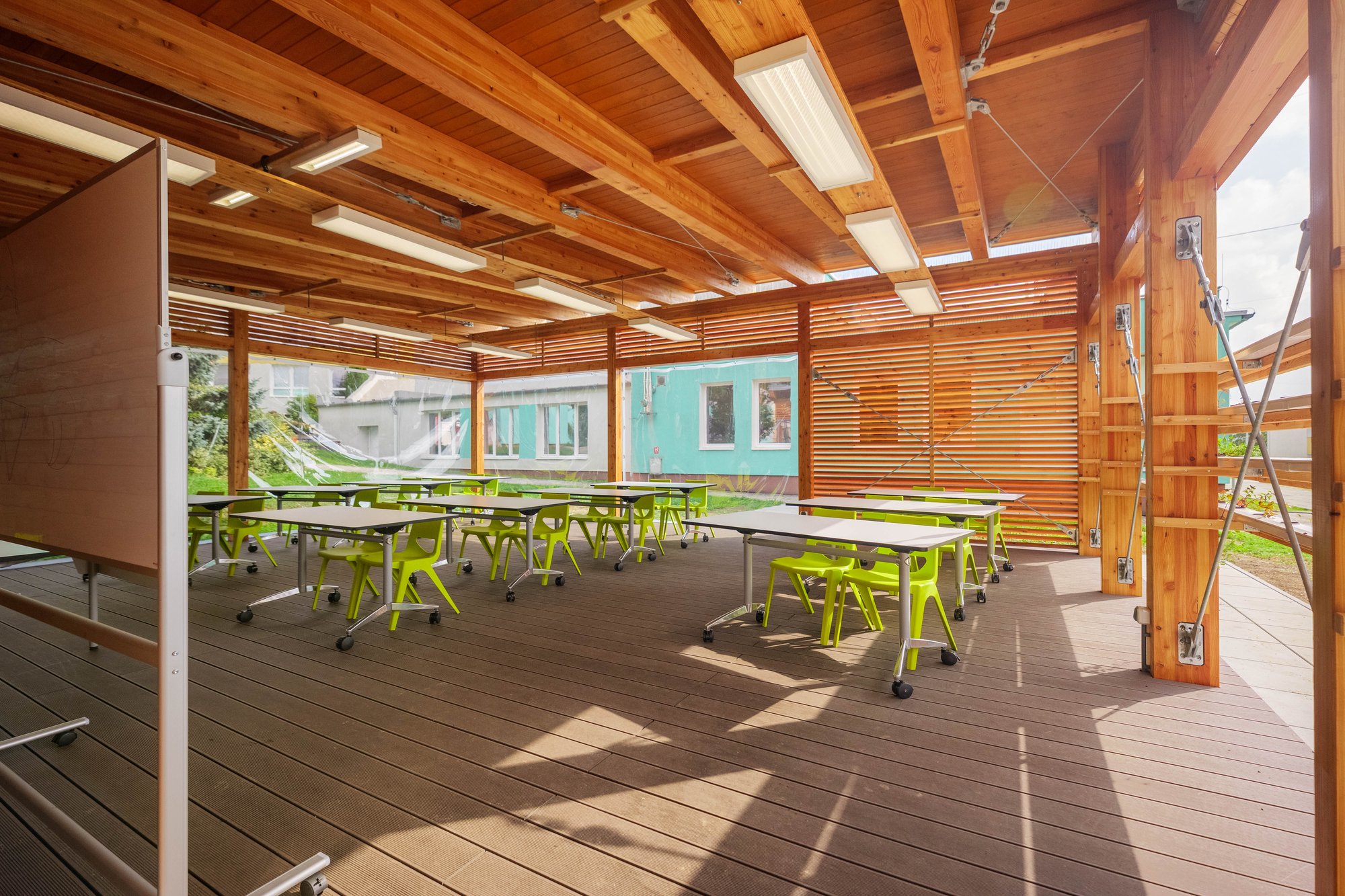


In Horní Moštěnice, they are investing both effort and considerable funds into the modernisation of the local nursery and primary school. It is, after all, their pride and joy. That is why the smart outdoor classroom for schools featuring hydroponics and solar panels caught their attention. Thanks to the utilisation of rainwater and its own electricity generation, the classroom serves as a practical demonstration of sustainable operations. Children can experience these principles firsthand in practice.
Při výběru venkovní učebny prostudovali starosta obce Vladimír Martínek a ředitel školy Libor Kubík desítky návrhů a většinu rychle zavrhli. Vysnili si bytelnou venkovní učebnu s širšími možnostmi využití, nechtěli jen tak nějaký venkovní přístřešek či altán. Návrh venkovní učebny s chytrými technologiemi jejich představě vyhovoval. Díky recyklaci srážek, solární energii a také provedení z trvanlivého sibiřského modřínu jsou provozní náklady učebny minimální. I to hrálo důležitou roli při rozhodování.
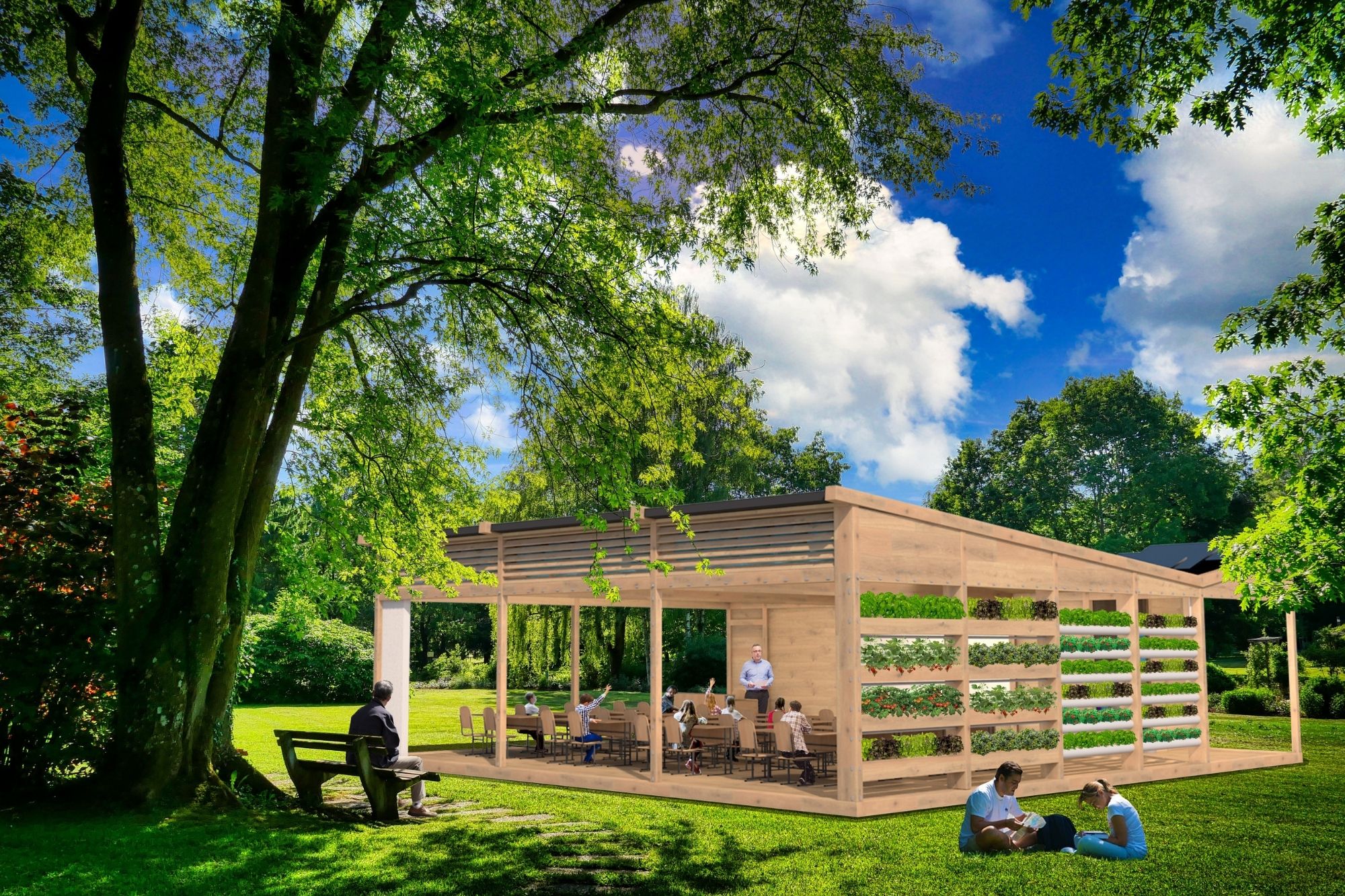
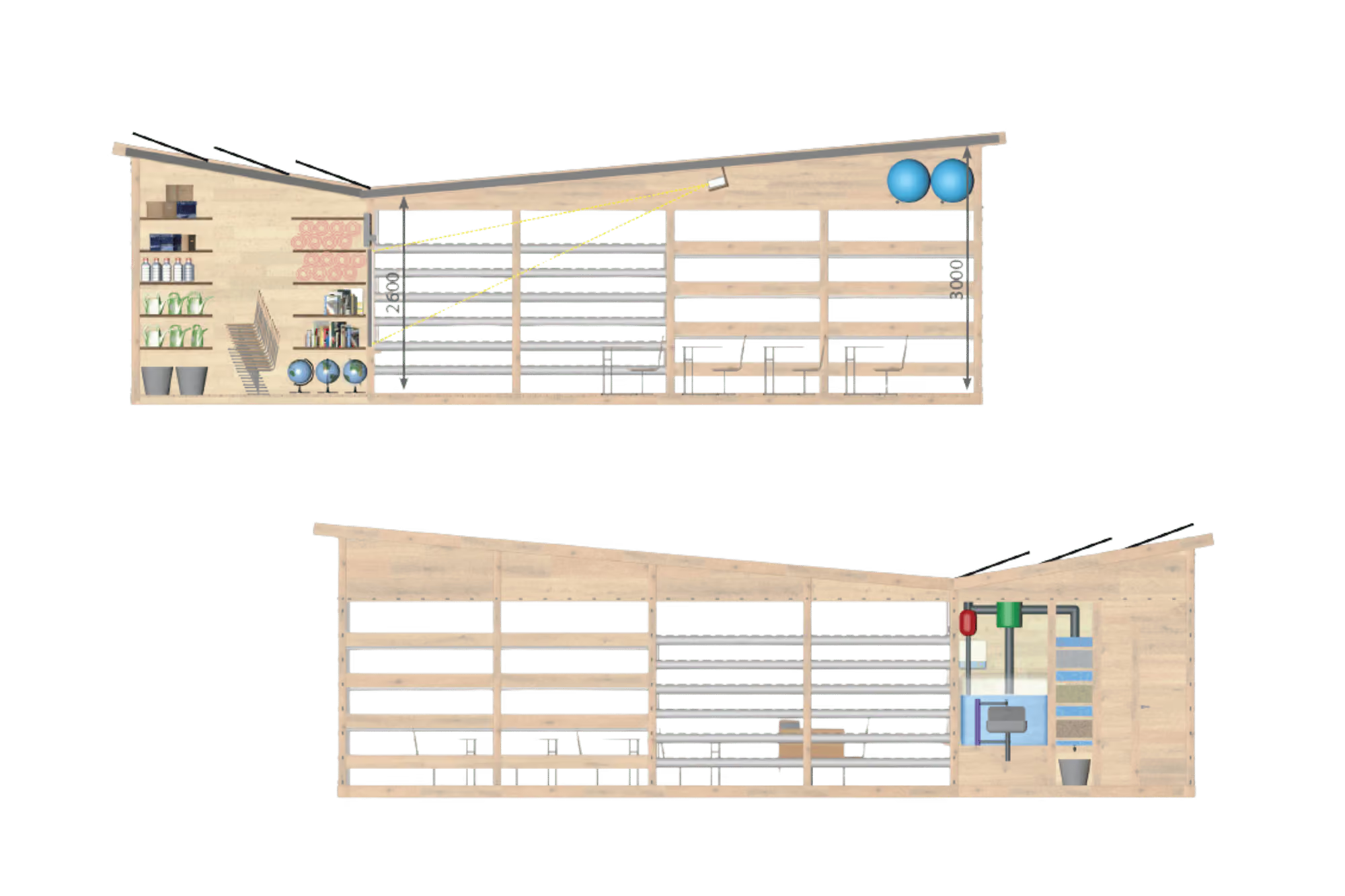
Although the EDUKO outdoor classroom is a standard model, full planning documentation was required based on local conditions. Designers prepared exact siting, concrete foundations and utility connections for electricity and internet. Rainwater is the only water source: it is collected in a storage tank and filtered microbiologically without chemicals. Clean water is then used for the hydroponic green wall or school experiments and is also available through a stainless-steel sink. To handle excess water during heavy rainfall, an underground soakaway system was added next to the classroom.

The smart outdoor classroom is a timber structure made of glued laminated beams anchored to concrete foundations. Steel cross-bracing reinforces the walls, while the roof is finished with profiled steel standing-seam panels. This robust combination of timber and steel ensures longevity. Furniture was selected by the architect and approved by the investor. Construction was carried out in cooperation with Acobrado, a specialist in timber buildings.


A full wall is equipped with hydroponic channels designed for decorative plants, herbs or even strawberries - all grown without substrate. Trailing plants create a compact green wall that provides shade and a cool microclimate on hot days. The automated water system handles treatment and distribution. Nine solar panels on the roof supply electricity, with the grid used only when sunlight is insufficient. The entire water system can be drained before winter.


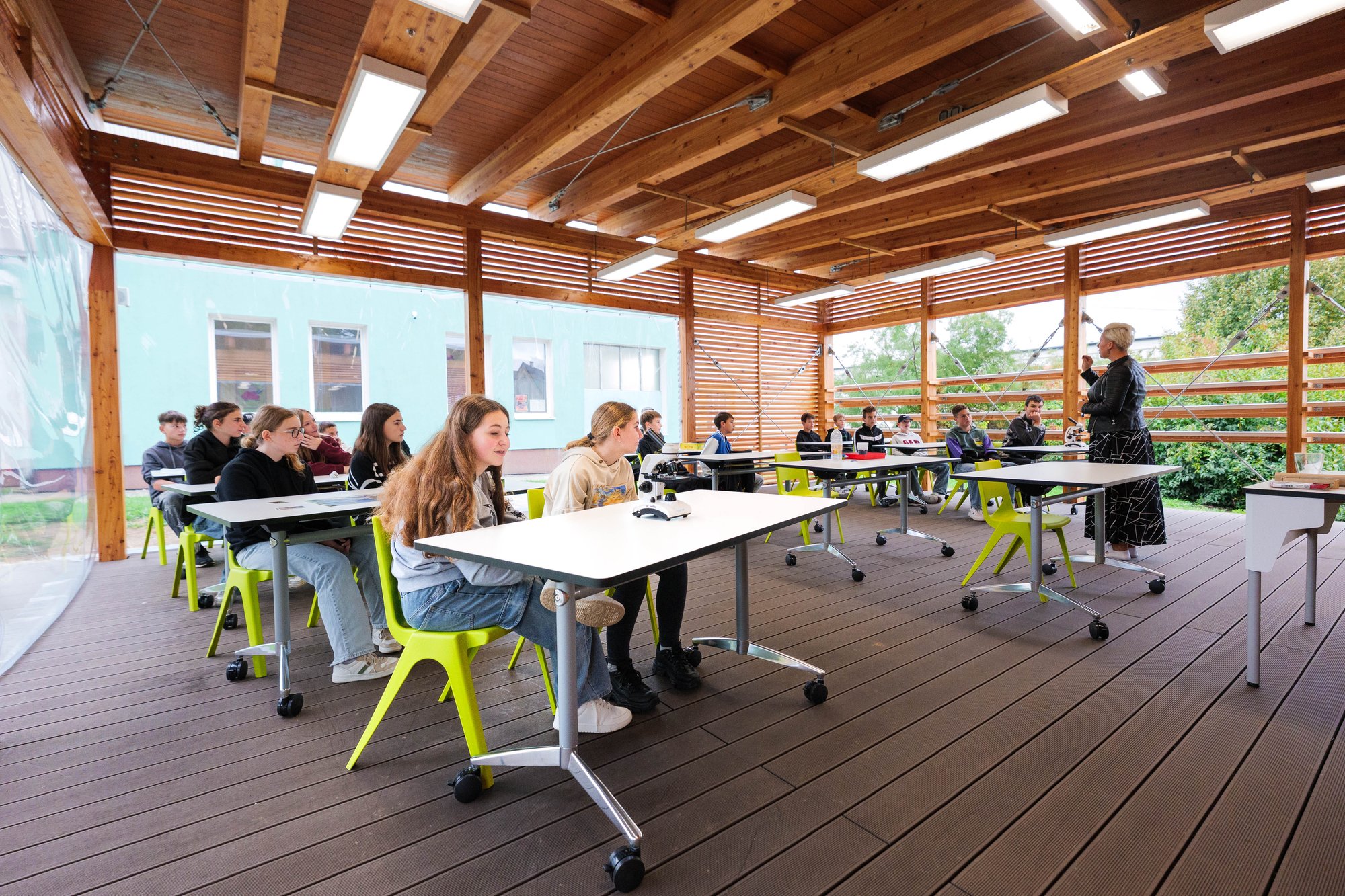
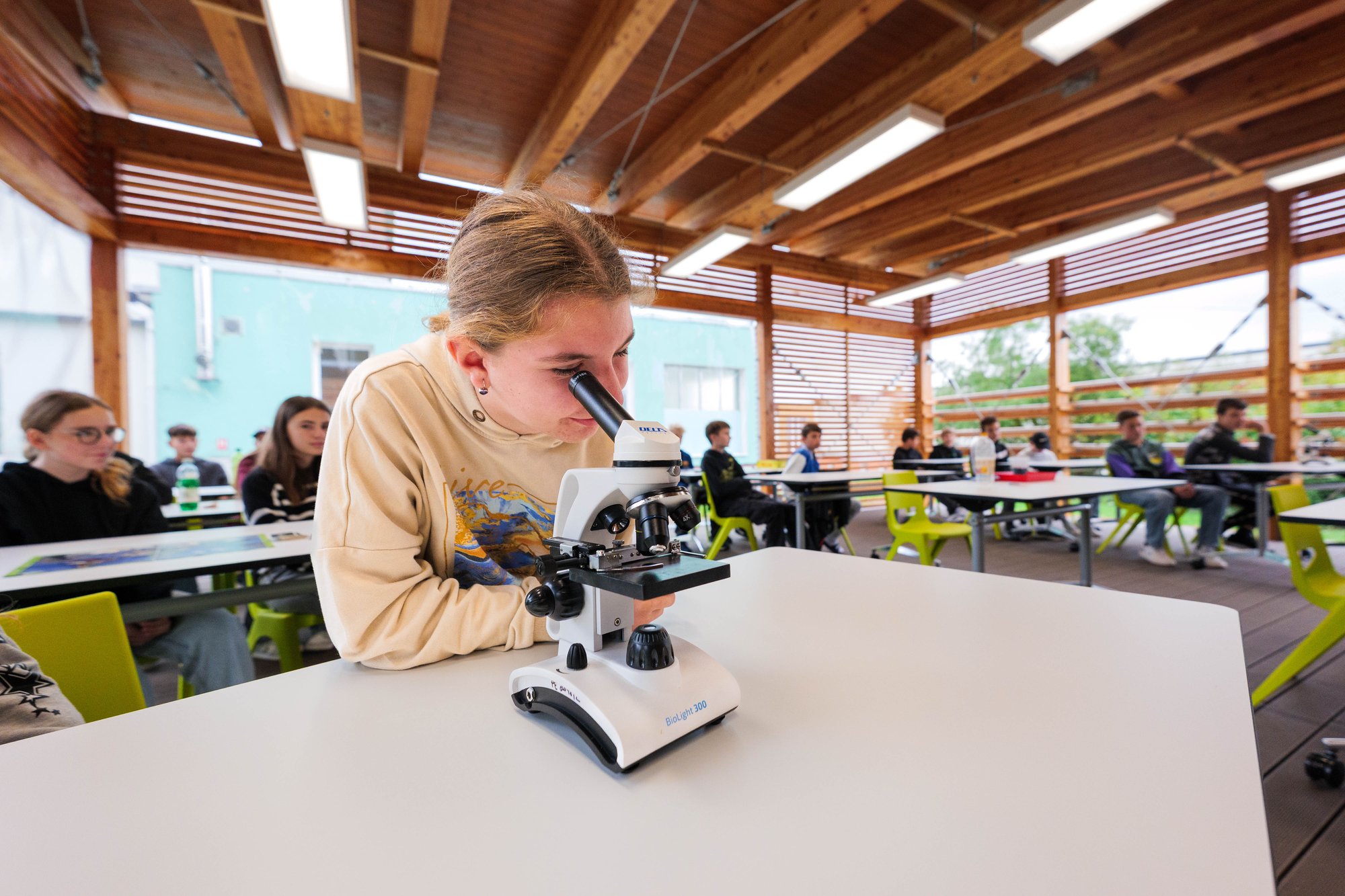
As the school’s founder and investor, the municipality is confident the classroom will be used extensively. The school is located in a closed campus of low pavilions that heat up quickly in warm months, so the outdoor classroom is a welcome alternative. Thanks to side covers, it can also be used in cooler spring and autumn weather. It is ideal for science and environmental education, allowing pupils to observe the full water cycle - from rainfall to filtration to plant growth - and learn sustainability in the most tangible way. Outside the school year, the municipality plans to use the space for council meetings, community events and cultural activities. The headteacher also plans to offer the smart outdoor classroom for commercial hire.


• groundworks
• construction of an access path
• utility connections (electricity, internet)
• underground soakaway system
• construction of the smart outdoor classroom
• lighting and furniture
• installation and connection of solar panels
• installation of the hydroponic system
• rainwater capture and filtration technology
• side covers for colder days

usable area
rainwater tank
persons (capacity)
annual electricity production
What impressed me most was the design of this modern classroom. Most other proposals were simply pergolas or garden shelters. I was also drawn to its energy self-sufficiency and low-maintenance design — Siberian larch is the most durable timber available on our market.